
WHAT HAPPENED
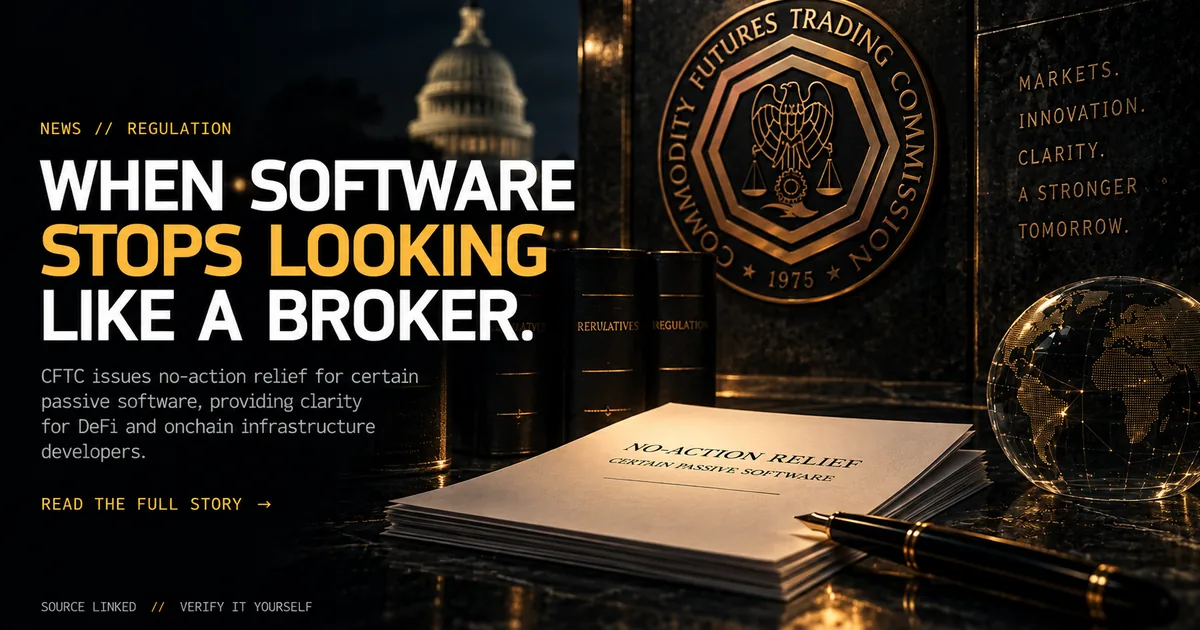
The CFTC’s Market Participants Division issued a no-action position for providers of passive software. Subject to specified conditions, staff said it would not recommend enforcement for failure to register as an introducing broker, or associated person of one, solely because the software facilitates user trading with registered futures commission merchants, introducing brokers and designated contract markets.
The agency described the position as similar to relief previously provided in Staff Letter 26-09, but now broadly available to qualifying providers.
WHY IT MATTERS
Crypto wallets and interfaces can be software, access points, transaction preparation tools or something closer to a financial intermediary depending on what they actually do. Registration obligations can change the economics and design of those products.
This CFTC action does not erase regulation around derivatives or create blanket immunity for software developers. It is a defined staff no-action position tied to specified conditions and regulated counterparties.
One of crypto’s oldest questions is becoming a regulatory design question: when is code merely a tool, and when does the operator behind it become an intermediary? The answer matters far beyond trading apps. Wallet architecture, custody and user control all sit close to that boundary.
WHAT TO WATCH
Watch how developers structure interfaces around the conditions in the letter and whether similar distinctions between software and intermediaries appear elsewhere in U.S. digital-asset policy.