
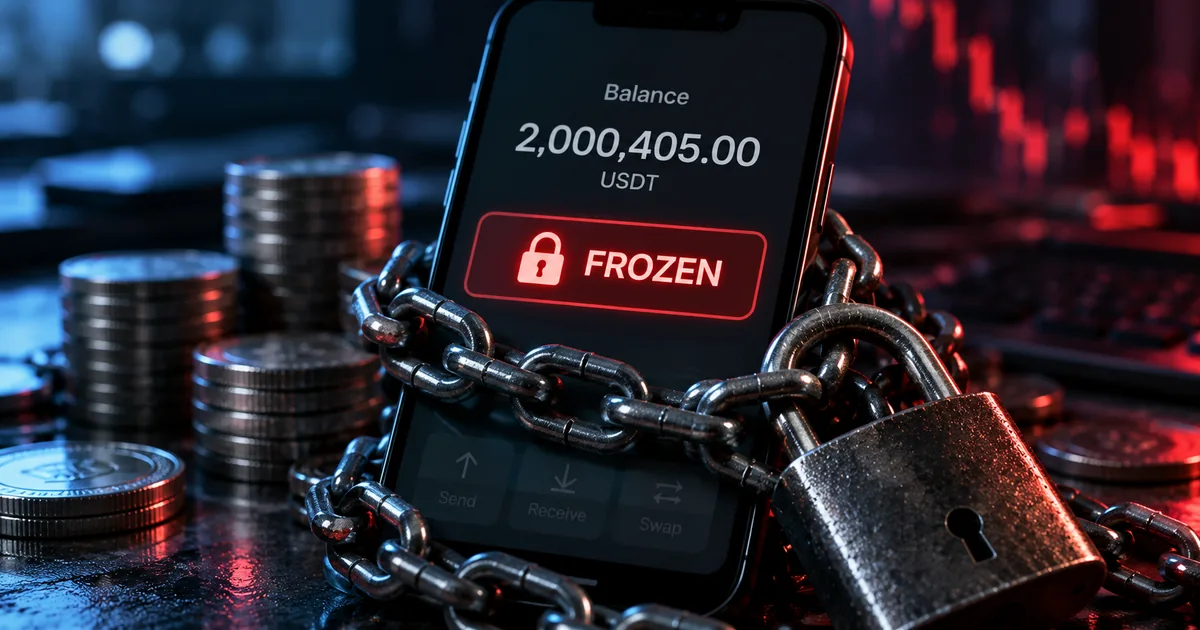
A blockchain blacklist monitoring service says 10 addresses on the TRON network were blacklisted in a little over three minutes on Saturday, October 24, with approximately $2 million in USDT balances associated with the addresses at the time of its report.
USDTBanList identified the window as 20:45:18 to 20:48:24 GMT and reported a combined $2,000,405 across the 10 wallets. The figures come from the monitoring service's published breakdown; ZeroTrace has not independently reconstructed each on-chain blacklist event.
TEN WALLETS. THREE MINUTES. $2 MILLION.
According to the tracker, the largest listed wallet held $1,176,956 USDT, approximately 58.8% of the reported total. The next two wallets held $240,183 and $237,936 respectively. The list also includes a blacklisted address with a zero USDT balance, showing that blacklist actions are not necessarily limited to wallets holding tokens at that moment.
The report describes a coordinated wave confined to TRON. The narrow time window is consistent with a batch of enforcement actions, but the timing alone does not establish who requested the freezes or whether automation was involved.
THE ORIGINAL USDTBANLIST REPORT
USDTBanList publicized its findings in an X post. The original post is embedded below, with a direct link in case X's embed is blocked by your browser.
TRON blacklist update: USDTBanList reports approximately $2 million associated with 10 blacklisted wallets on October 24, 2026.
— USDTBanList (@USDTBanList) October 24, 2026
WHAT A USDT BLACKLIST ACTUALLY DOES
USDT is a token issued by Tether, not a permissionless cryptocurrency in the same sense as Bitcoin. Its token contracts include issuer-controlled blacklist functionality. When an address is blocked at the token-contract level, it may be prevented from transferring its USDT even though its owner still possesses the wallet's private keys.
That distinction is central: blacklisting is not the same as seizing the wallet's private keys, and a frozen token balance is not necessarily confiscated or destroyed. The blockchain can remain operational while the issuer restricts movement of a particular token.
WHY WERE THE ADDRESSES BLOCKED?
The monitoring service characterizes the addresses as suspected of compliance violations or illicit activity. However, its report does not establish a verified legal basis for each individual blacklist entry, identify the ultimate owners or show a public Tether statement explaining this specific wave. Those questions remain open.
The published dollar figures describe reported balances associated with blacklisted addresses; they should not be interpreted as a verified amount of stolen funds, criminal proceeds or recovered assets.
SELF-CUSTODY DOES NOT ALWAYS MEAN UNRESTRICTED CONTROL
The incident illustrates a basic difference between holding a wallet's keys and controlling the rules of the asset held inside it. A self-custody wallet can protect access credentials from an exchange, but it cannot override a token issuer's contract-level transfer restrictions.
For anyone using stablecoins as a digital substitute for cash, that is a material design tradeoff: the same mechanism that can help block stolen or sanctioned funds can also prevent an address from moving its balance without the holder's consent.